The Forty-Seven Drafts Living in Your Phone Right Now
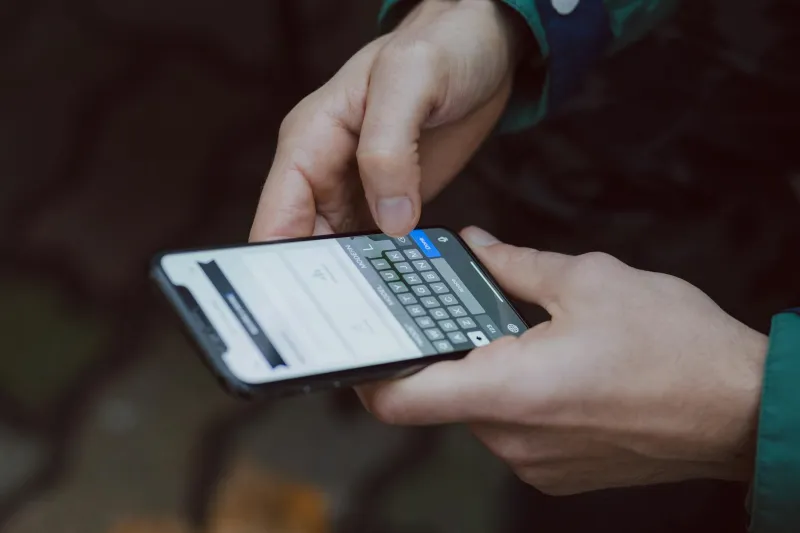
The Cursor Blinks. You Panic.
It started so innocently. Someone asked if you wanted to grab coffee tomorrow, and you wanted to say yes. A simple response. Two words, maximum. How hard could it be?
That was forty-three minutes ago.
Now your phone contains a graveyard of attempted responses, each one representing a different version of yourself that you tried on and immediately discarded like outfits before a first date. The message thread shows "typing..." and "not typing" so many times that your friend probably thinks you're having some kind of digital seizure.
The Evolution of a Single Text
Draft #1: "Yes!" Delete. Too enthusiastic. You sound desperate for human contact.
Draft #2: "Yeah, sure." Delete. Too casual. They'll think you don't actually want to go.
Draft #3: "That sounds great! What time works best for you?" Delete. The exclamation point makes you sound like a golden retriever. Also, who talks like that?
Draft #4: "Definitely! I know this great place downtown that has amazing lattes and..." Delete. You're not writing a Yelp review. Calm down.
Draft #5: "Sure, what did you have in mind?" Delete. This makes it sound like they need to plan everything. You're being high-maintenance.
Draft #6: "Coffee sounds perfect." Pause. Stare at it. This is normal human language. But is it too formal? Are you a robot? Do robots drink coffee?
The Personality Crisis
Somewhere around draft eight, you start to question everything about your communication style. Are you usually this formal with friends? Do you always use complete sentences? When did you start caring about punctuation in text messages?
You scroll up through your previous conversations, conducting forensic analysis on your own texting patterns. Apparently, you use way more emojis than you remembered. Also, your default response to everything is "haha" followed by some variation of agreement. When did you become someone who laughs at their own responses to plans?
Then you notice that sometimes you write "totally" and sometimes you write "definitely," and now you're spiraling about whether these word choices reveal deep psychological differences in your level of enthusiasm.
The Tone Detector Malfunction
The real problem is that text messages exist in an emotional vacuum. Without vocal inflection or facial expressions, every message becomes a Rorschach test. "Sounds good" could mean anything from genuine excitement to passive-aggressive resignation.
So you start adding qualifiers: "Sounds good to me!" "Sounds good 😊" "Sounds really good!" "That sounds good to me!"
Each version carries slightly different emotional weight, like you're a DJ trying to find the perfect level for the bass. Too much enthusiasm and you seem fake. Too little and you seem like you're doing them a favor by existing in their presence.
The emoji becomes a crucial diplomatic tool. The smiley face says "I'm friendly." The thumbs up says "I'm efficient but positive." No emoji says "I'm either very cool or mildly annoyed, and you'll never know which."
The Overthinking Olympics
By draft fifteen, you're no longer crafting a response about coffee. You're composing a character study. Every word choice becomes a statement about who you are as a person.
Do you say "tomorrow" or "Tuesday"? "Tomorrow" is casual and assumes shared context. "Tuesday" is specific and organized. Which version of yourself do you want to present? The laid-back friend or the person who has their life together?
Should you suggest a specific time or let them choose? Suggesting a time shows initiative but might conflict with their schedule. Asking them to choose is considerate but puts the planning burden on them. Why is coffee logistics more complicated than international trade negotiations?
The British Invasion
Somewhere around draft twenty-two, your phone's autocorrect starts suggesting increasingly formal alternatives. "Brilliant!" "Lovely!" "Cheers!" Suddenly you're texting like you're auditioning for a BBC period drama.
You don't know how this happened. You're from Ohio. You've never said "brilliant" out loud in your life. But somehow, in the pressure cooker of text composition, your brain decided that the solution to overthinking was to become inexplicably British.
"That would be absolutely lovely! Shall we say around ten-ish?"
You stare at this monstrosity. You've become a character from a Jane Austen novel. Your friend is going to think you've been possessed by the ghost of someone from the Cotswolds.
The Aggression Spectrum
Delete. Start over.
Now you're swinging in the opposite direction. Every attempt sounds vaguely hostile:
"Fine." "Okay." "Sure thing." "Works for me."
These responses all technically convey agreement, but they read like you're being held at gunpoint and forced to socialize. There's an invisible edge to everything, like you're agreeing to coffee but also letting them know that you have other, better options.
You try to soften it: "Sure thing!" The exclamation point is supposed to add warmth, but instead it makes you sound like a customer service representative who's having a really good day.
The Minimalist Phase
Desperation drives you toward extreme simplicity:
"Yes" "Sure" "👍"
But these feel too abrupt. Like you're communicating via telegraph and paying by the word. Your friend suggested a pleasant social activity, and you're responding like you're confirming a business transaction.
The thumbs up emoji is particularly dangerous territory. It's efficient, but it also suggests that you couldn't be bothered to use actual words. It's the digital equivalent of grunting in acknowledgment.
The Recursive Loop
By draft thirty-four, you're composing responses to your own responses. What if they reply with questions about your response? What if "sounds good" prompts them to ask what time you prefer, and then you have to go through this entire process again?
You start crafting preemptive responses: "Sounds good! I'm free anytime after 9." "Perfect! Does 10 AM work?" "Coffee sounds great - want to try that new place on Fifth Street?"
Now you're not just overthinking one message; you're overthinking an entire conversation that hasn't happened yet. You're playing chess while they're playing checkers, except the chess board is made of anxiety and the pieces are different versions of your personality.
The Revelation
Finally, in a moment of clarity, you realize what's happening. This isn't about coffee. This is about the impossible burden of representing your entire self through a tiny rectangle of text. Every message is a performance, every response a carefully curated glimpse into your personality.
You're not overthinking the text; you're overthinking human connection itself. The coffee invitation is simple. Your response should be simple. You want to go, so you'll say yes. Everything else is just noise.
The Resolution
You delete everything and type: "Sounds good!"
Perfect. Friendly but not desperate. Enthusiastic but not manic. The exclamation point adds warmth without seeming forced. You've achieved the impossible: a natural-sounding response that accurately conveys your feelings.
You hit send.
Three seconds later, they reply: "Cool. 10?"
You stare at their response. Two words. No punctuation. No emoji. No existential crisis. They just... answered.
And now you have to respond to their response.
The cursor blinks. You panic.