The Message Living Rent-Free in Your Mental Drafts Folder
The Message Living Rent-Free in Your Mental Drafts Folder
There's a text message you've been meaning to send for three weeks now. It started simple enough—just a quick "Hey, how are things?" or "Thanks for dinner last month!" But somewhere between thinking about it and actually typing it, this innocent little message has taken up permanent residence in your brain like the world's most passive-aggressive houseguest.
You know exactly what you want to say. You've rehearsed it seventeen different ways while brushing your teeth, refined the tone during your commute, and even practiced the timing. Tuesday at 2 PM? Too random. Thursday evening? Might seem desperate. Sunday afternoon? Perfect casual energy. Except now it's been so long that Sunday feels like it was during the Carter administration.
The Evolution of a Simple Text
What started as "Hey Sarah, thanks for the book recommendation!" has somehow morphed into a complex philosophical examination of your entire friendship. Do you mention that you actually haven't started reading it yet? Should you acknowledge the weird gap in communication? Maybe throw in a casual life update so it doesn't seem like you only text when you need something?
By week two, your mental draft has grown into a novella. "Hey Sarah! Hope you're doing well! Thanks so much for that book rec—I've been meaning to dive in but you know how crazy things have been (not that I'm making excuses lol). How's the new job going? We should definitely catch up soon!"
Too many exclamation points? Definitely too many exclamation points. Also, "lol" feels forced. And "we should catch up soon" is basically a lie because your calendar looks like a game of Tetris played by someone having a panic attack.
The Paralysis of Perfect Timing
The longer you wait, the more weight this message carries. It's no longer just a text—it's a statement. It's proof that you're a thoughtful friend who remembers things. It's evidence that you're not the kind of person who ghosts people for three weeks and then pretends nothing happened.
Except now you are the kind of person who's been mentally composing the same message for 21 days like some sort of communication groundhog day.
You've analyzed the optimal sending time with the dedication of a NASA mission planner. Not during work hours—that's inconsiderate. Not too late at night—that's weird. Not too early on weekends—that's presumptuous. The window of socially acceptable texting has become narrower than a parking space in Manhattan.
The Phantom Typing Indicator
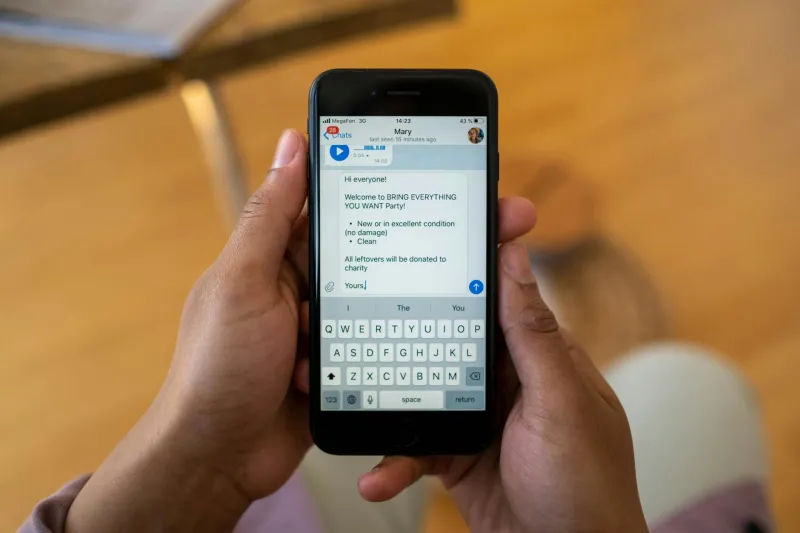
Sometimes you actually open your phone with full intention of sending it. You navigate to Sarah's contact, your thumbs poised over the keyboard like a pianist about to perform Carnegie Hall. You type the first few words, then immediately delete them. The typing indicator probably flashed for 0.3 seconds—just long enough to make Sarah think her phone glitched.
You've now become that person who shows up as "typing" and then never sends anything. Sarah probably thinks you're having some sort of digital stroke. Either that, or she's developed the same condition and is also staring at her phone, composing the perfect response to your non-existent message.
The Great Overthink Spiral
By week three, you've convinced yourself that sending this message requires a PhD in social dynamics. What if Sarah thinks it's weird that you're texting out of nowhere? What if she's going through something and doesn't want to chat? What if she's forgotten who you are entirely and has to scroll through her contacts trying to place your name?
Worse yet—what if she responds immediately and enthusiastically, and then you have to maintain an actual conversation? You haven't prepared for that scenario. Your mental draft only covers the initial message, not the inevitable "How are you?" follow-up that will require you to summarize your entire existence since your last interaction.
The Plot Twist Nobody Saw Coming
Here's the beautiful irony: while you've been crafting this literary masterpiece of casual friendship maintenance, Sarah has completely forgotten whatever prompted this message in the first place. The book recommendation? She's recommended forty-seven books to various people since then. The dinner? She can barely remember what she ate yesterday.
If you sent "thanks for the book!" right now, Sarah would spend the next ten minutes scrolling through your message history trying to figure out which book you're talking about. She might even text her sister: "Did I recommend a book to someone? What book? When?"
The Liberation of Just Pressing Send
The truth is, the perfect message doesn't exist. The perfect timing is a myth. That carefully crafted, emotionally calibrated, tone-perfect text you've been composing is probably 90% less important to everyone else than it is to you.
Sarah would be perfectly happy to receive "hey, how's it going?" at 3:47 PM on a random Wednesday. She's not going to analyze your punctuation choices or wonder why you didn't include more emoji. She's just going to think, "Oh, cool, I haven't heard from them in a while."
So go ahead—send that message that's been squatting in your brain like an unfinished home renovation project. Press send before you can overthink it. Because the only thing worse than sending an imperfect text is never sending it at all, leaving both of you wondering why modern communication has to feel like defusing a bomb when all you wanted to say was "hi."