The Psychological Warfare That Erupts When Someone Steals Your Seat That Was Never Actually Yours
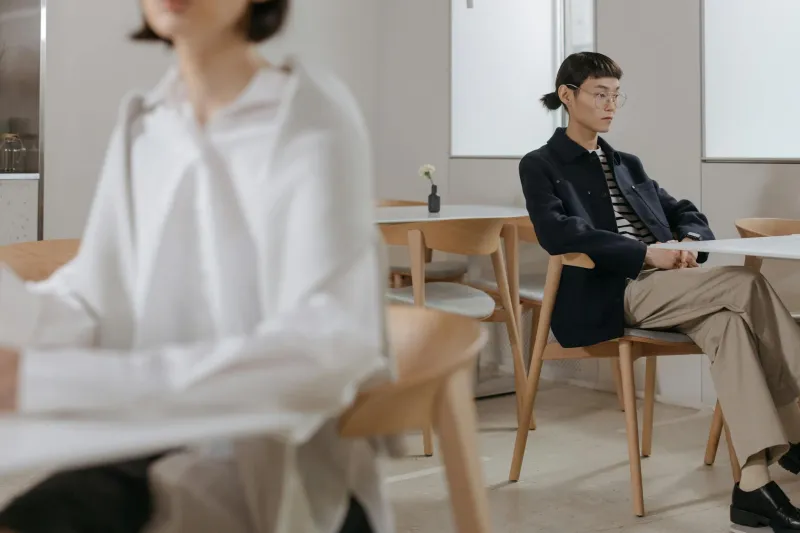
The Sacred Geography of Unspoken Claims
It starts innocently enough. You walk into your usual coffee shop, office, or lecture hall, and there's someone sitting in your seat. Not the seat with your name on it, obviously. Not the seat you paid for or reserved or have any legal claim to whatsoever. Just the seat that has become, through the ancient laws of human habit and cosmic justice, undeniably yours.
And now this absolute sociopath is sitting there like they belong.
Stage One: Denial and Confusion
Your first instinct is to assume you've made a mistake. Maybe you're in the wrong building. Maybe you've somehow traveled through time and space and ended up in a parallel universe where seat assignments work differently. You check your phone, your surroundings, your fundamental understanding of reality.
Nope. Same place. Same time. Same you. But completely wrong person in completely right seat.
The stranger is just sitting there, completely oblivious to the fact that they've essentially walked into your living room and claimed your favorite armchair. They're probably scrolling through their phone or typing on their laptop like some kind of productivity-focused home invader.
Stage Two: The Mounting Rage
This is when the internal monologue really kicks into high gear. You start cataloging every single reason why this is your seat, building an airtight case that would hold up in the court of public opinion if such courts existed for seating disputes.
You've sat there every Tuesday and Thursday for three weeks. THREE WEEKS. That's basically a lease agreement in the unwritten social contract of public spaces. You know exactly how the morning light hits that spot at 9:30 AM. You've memorized which electrical outlet is closest. You've developed a relationship with that particular chair that borders on romantic.
This person just waltzed in here like some kind of seating nomad with no respect for established territorial boundaries.
Stage Three: Surveillance and Strategic Planning
Now you're hovering nearby, pretending to check your phone while conducting covert reconnaissance. You're analyzing their body language for signs of imminent departure. Are they packing up? Was that a stretch or are they just getting comfortable for the long haul?
You start developing increasingly elaborate contingency plans. Maybe you'll sit close enough that they feel your disapproving energy. Maybe you'll clear your throat meaningfully. Maybe you'll just stand there until the sheer awkwardness forces them to relocate.
But deep down, you know you're going to do absolutely none of these things because you're a functioning adult who understands that confronting strangers about imaginary seat ownership is not socially acceptable behavior.
Stage Four: The Existential Crisis
This is when things get really dark. You start questioning everything. If you don't actually own this seat, do you own anything? Is ownership just a social construct? Are you just a temporary visitor in all the spaces you thought were yours?
You remember every other seat you've ever claimed - your desk at work, your usual spot at the gym, that particular barstool at your neighborhood pub. Are they all just illusions of control in a chaotic universe where anyone can sit anywhere at any time?
The stranger shifts slightly in their seat, and you interpret this as them getting more comfortable, more settled, more permanently ensconced in what should rightfully be your domain.
Stage Five: Reluctant Acceptance and Strategic Relocation
Eventually, you accept defeat. You find another seat - probably one that's slightly less perfect, with worse lighting and a wobbly table. You sit down with the dignity of someone who definitely wasn't just having a mental breakdown over furniture arrangements.
But here's the thing: within approximately forty-seven seconds of sitting in your new location, you've already started the process of claiming it. This is your seat now. This has always been your seat. You can't even remember why you thought that other seat was so great.
Until tomorrow, when you walk in and find someone else sitting in this spot, and the whole beautiful cycle begins again.
The Unspoken Truth
The most ridiculous part? If someone approached you and said, "Excuse me, I think you're in my usual seat," you'd probably apologize and move immediately. But somehow, when you're the displaced party, it feels like the greatest injustice in human history.
We're all just territorial animals pretending to be civilized, getting emotionally attached to pieces of furniture that belong to establishments we don't own, in spaces we have no actual claim to. And we'll continue this absurd dance of unspoken seat ownership until the end of time, because apparently this is just what humans do.
The seat thief finishes their coffee and leaves. You don't move back to your original spot out of principle, even though it's now available and calling to you like a siren song. You've committed to this new seat now. This is your life.
At least until someone sits here tomorrow.