The Seven-Act Shakespearean Tragedy That Happens When Your Burger Shows Up With Pickles
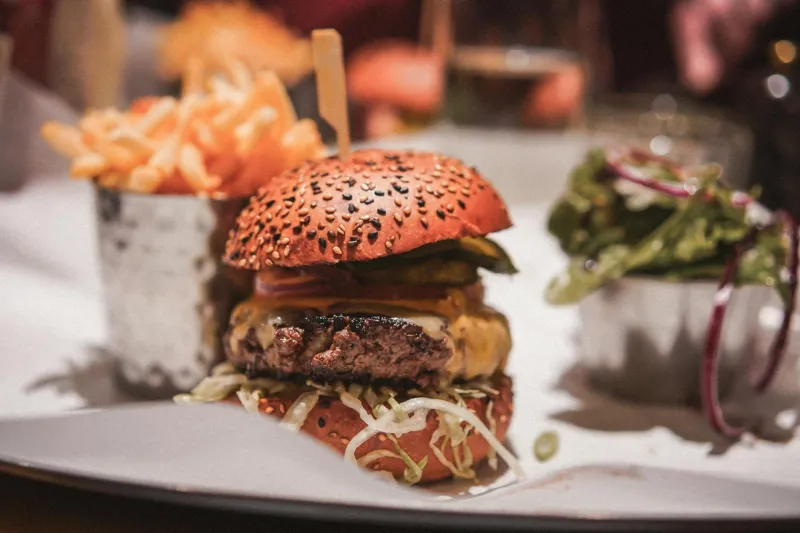
Act I: The Discovery
There it is. Sitting on your plate like a green, briny middle finger extended directly at your soul. The pickle. The one thing—the one thing—you specifically, clearly, unambiguously said you didn't want. You even made that awkward little laugh when you said "no pickles" because you know it's such a basic request that you felt embarrassed asking.
But here we are. You and the pickle. Locked in a staring contest that will define the next forty-seven minutes of your existence.
Act II: The Silent Assessment
Okay, let's think about this rationally. How bad could it really be? Maybe you could just... pick them off? Sure, they've already contaminated the bun with their pickle essence, and that weird pickle juice has probably seeped into the lettuce, but maybe—MAYBE—you could salvage this.
You glance around the restaurant. Your server is nowhere to be found, naturally. They've vanished into that mysterious parallel dimension where all restaurant staff go the moment you need something. You know they're back there, probably folding napkins or having deep philosophical discussions about ranch dressing, but they might as well be on Mars.
Your dining companion is already three bites into their correctly-prepared meal, making those satisfied little "mmm" sounds that feel like personal attacks right now.
Act III: The Mental Rehearsal
Fine. You'll say something. You're a paying customer. You have rights. You specifically requested no pickles, and this burger is basically swimming in pickle juice at this point. You'll just politely flag down the server and explain the situation.
But wait—how do you phrase this? "Excuse me, I asked for no pickles" sounds accusatory. "Sorry to bother you, but there seems to be a small pickle situation" sounds like you're apologizing for their mistake. "This has pickles on it" is too aggressive. "Could I possibly get this remade without pickles if it's not too much trouble and I'm really sorry to be difficult" is too pathetic.
You practice the conversation in your head seventeen different ways, crafting the perfect tone that conveys disappointment without rudeness, assertiveness without aggression, and gratitude for their future cooperation without seeming desperate.
Act IV: The Catastrophic Scenarios
What if they think you're that customer? The one who complains about everything and makes servers' lives miserable? What if they roll their eyes when they walk back to the kitchen? What if they spit in your replacement burger? (They won't, but your brain is convinced they will.)
What if the kitchen is backed up and now everyone at your table has to wait another twenty minutes while you get your pickle-free burger? What if your dining companions start getting annoyed? What if this ruins the entire evening?
What if the server gets defensive and starts explaining how the kitchen is really busy and mistakes happen and suddenly you're in some weird standoff about pickle policy?
Or worse—what if they bring you a new burger and it's somehow worse than the first one? What if it's cold? What if they forgot the cheese this time? What if you've opened Pandora's box of food service complications?
Act V: The Negotiation With Yourself
Maybe you're being too picky. Pickles are just cucumbers with commitment issues. Maybe this is a sign that you should be more adventurous with your food choices. Maybe the universe is telling you to embrace the pickle.
You take a small bite around the pickle area. It's... not great. The pickle essence has definitely infiltrated the entire structural integrity of the burger. This tastes like sadness with a side of regret.
But is it worth the hassle? Is it worth the potential awkwardness? Is it worth becoming "pickle complaint person" in this server's mental database of difficult customers?
You look at the burger again. It looks back at you, those pickle slices glistening like tiny green medals of your indecision.
Act VI: The Moment of Truth
The server finally materializes, probably through some kind of restaurant staff teleportation system. They're smiling, asking how everything is, and this is it. This is your moment.
"Everything's great!" you hear yourself saying, because apparently your mouth has declared independence from your brain.
They walk away. You stare at your pickle-contaminated burger in disbelief. You just lied. You actively, consciously lied about the pickle situation. You are now complicit in your own culinary disappointment.
Act VII: The Anticlimactic Resolution (Alternative Ending)
OR—in the parallel universe where you actually speak up—you mumble something about the pickles, and the server says "Oh no problem, I'll get you a new one right away!" and whisks your plate away without even blinking.
Four minutes later, you have a perfect, pickle-free burger. The server doesn't seem annoyed. Your dining companions haven't staged a revolt. The kitchen didn't collapse. The world didn't end.
The entire crisis you spent twenty minutes mentally preparing for gets resolved in approximately twelve seconds.
The Eternal Cycle
And yet, the next time you get a wrong order, you'll go through this exact same internal Broadway production all over again. Because apparently, we're all destined to treat simple restaurant corrections like diplomatic negotiations between warring nations.
Somewhere in America right now, someone is staring at an unwanted tomato and composing a mental dissertation on whether it's worth mentioning. The cycle continues. The pickles persist. And we all pretend this is totally normal behavior.
Just like me. Just like you. Just like everyone who's ever received the wrong order and turned it into a personal philosophical crisis about the nature of customer service and social interaction.
Pass the ketchup. I'm eating this pickle burger.