You Have Seen This Film Exactly Once and You Will Defend It to the Death
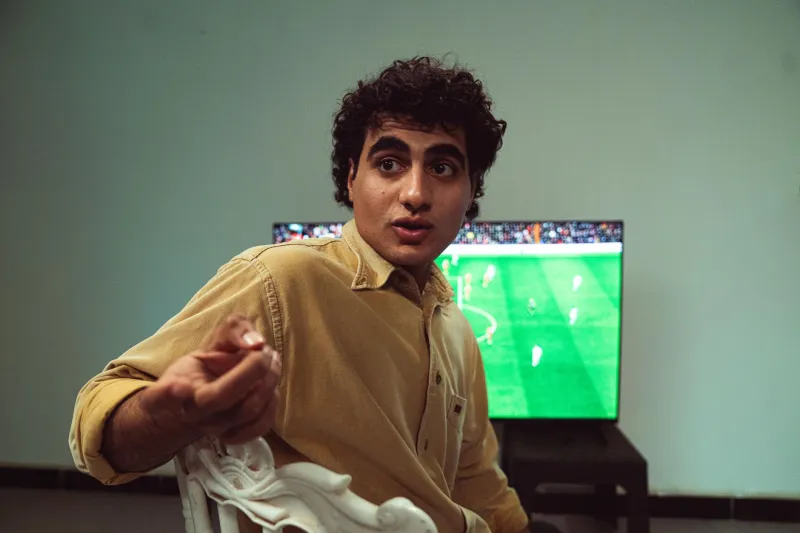
It starts innocently. Someone mentions a movie at dinner, maybe a film you watched once on a Tuesday night nine years ago while eating cereal in the dark. You nod. You smile. You say, "Oh yeah, I love that one."
And then someone else at the table says, "Wait, wasn't the twist that the brother did it?"
And something inside you — something ancient and inexplicable — rises up.
"No," you say, with the quiet confidence of a man defusing a bomb. "It was the neighbor."
You have absolutely no idea if it was the neighbor.
The Memory You Are Working With Is Basically a Rumor
Here is an honest inventory of what you actually retain from this film: a general vibe, one line of dialogue that may have been from a completely different movie, and a strong emotional conviction that you enjoyed it. That is the entire archive.
The director's name? Gone. The main character's name? You are going to say something like "the guy" and gesture vaguely. Whether it was set in Chicago or Seattle or some fictional coastal town that looked suspiciously like Vancouver? Unknowable.
What you do have — and this is important — is confidence. A specific, load-bearing confidence that has somehow survived nearly a decade without a single piece of supporting evidence.
This is your superpower. It is also your curse.
The Moment Someone Challenges You Is the Moment You Dig In
Under normal circumstances, you are a reasonable person. You admit when you are wrong. You fact-check things before you repeat them. You are, by most accounts, a functional adult with a healthy relationship to uncertainty.
But not about this movie. Not now. Not in front of these people.
When your friend pulls out their phone to look it up, something shifts. The stakes, which were previously zero, have somehow become enormous. Your credibility — your entire identity as someone who watches films and has opinions about them — is suddenly on the line. You cannot back down now. You are nine moves into this chess game and retreating would mean admitting that you have been confidently wrong for approximately four minutes straight.
So you double down.
"I'm pretty sure I've seen it twice, actually," you say, which is a complete fabrication you invented in real time.
The Invented Plot Details Are Arriving Now
This is the phase where things get genuinely creative. Because you cannot just say "the neighbor did it" and leave it there — that is not a defense, that is a claim. A defense requires details. And since your actual memory is producing nothing useful, your brain has started manufacturing supporting evidence on the fly.
"There's that whole scene in the third act," you say, "where he's standing outside in the rain."
Was there a scene in the rain? You have no idea. There is always a scene in the rain. You are playing the odds.
"And the way they set it up earlier with the — you know, the thing with the door." You nod slowly, as if recalling something profound. "That was the whole point."
The thing with the door. You have invented a thing with a door. You are committed to this door. The door is load-bearing now.
The Wikipedia Moment
Eventually, someone looks it up. This is unavoidable. The phone comes out, the Wikipedia page loads, and the room goes quiet for a moment that feels much longer than it is.
The twist was neither the brother nor the neighbor. It was the accountant. There was no accountant you remember. There was, apparently, an accountant.
There is also no rain scene. There is, however, a scene involving a window, which is close enough that you quietly decide counts as a moral victory.
"Okay but the overall point I was making was right," you say, pivoting smoothly. "The whole theme of the movie is about trust and betrayal, and that's basically what I was getting at."
This is an extraordinary recovery. You should be proud.
The Aftermath
Later, alone, you will spend forty-five minutes reading the full Wikipedia summary, two reviews, and a Reddit thread from 2016 about the film's ending. You will finally know what it was actually about. You will feel a brief flash of embarrassment, followed immediately by the unshakeable conviction that your instincts had been directionally correct the whole time.
You will not watch the movie again. That would be too much information. Better to keep the legend intact.
Somewhere out there, someone is going to bring it up again at a different dinner party. And you will be ready. You know about the accountant now. You know about the window.
You have basically seen this film twice.