Oh, You'll Remember It. You Absolutely Will Not Remember It.
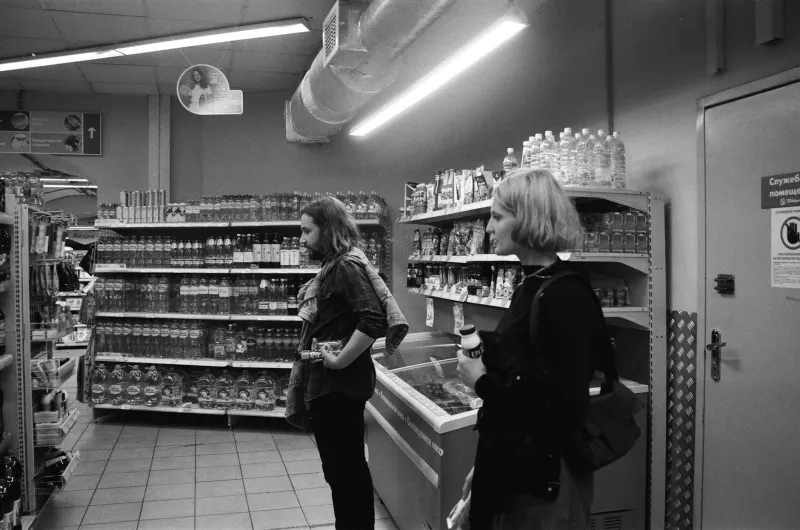
Oh, You'll Remember It. You Absolutely Will Not Remember It.
Somewhere between your couch and the grocery store, your brain made a quiet, catastrophic decision. It decided that the three-item mental list you were carrying — milk, the thing your partner specifically mentioned twice, and that other thing — was so simple, so obvious, so deeply embedded in your consciousness that committing it to paper would be an insult to your intelligence.
This is the story of how that goes. It goes badly. It always goes badly.
Stage One: The Confidence
It starts with a feeling. A warm, totally unearned sense of cognitive superiority. You're standing in the kitchen, you've just thought of something important, and someone nearby — a reasonable, well-meaning person — suggests you write it down.
You wave them off.
"I'll remember it," you say, with the calm certainty of someone announcing a scientific fact. Not I think I'll remember it. Not I'll probably remember it. Just: I'll remember it. Declarative. Final. Wrong.
The item in question is not complicated. It might be a specific brand of pasta sauce. It might be the model number for a filter your refrigerator needs. It might be the brilliant, fully-formed idea that came to you at 2:14 a.m. that was genuinely going to change things. You considered getting up to write it down. You did not get up. You told yourself you'd remember in the morning.
You did not remember in the morning.
Stage Two: The Reassurance Loop
Here is where it gets interesting. Between the moment of confidence and the moment of reckoning, there is a middle period — a grace period, really — during which you periodically reassure yourself that the information is still in there.
Driving to the store: I've got it. Parking the car: Milk, the thing, the other thing. Walking through the automatic doors: Totally fine.
This is the reassurance loop. It feels productive. It is not productive. You are not actually accessing the memory — you're just confirming that you believe the memory exists, which is a completely different and far less useful thing.
The loop continues until you're standing in front of the shelves and the loop breaks.
Stage Three: The Blankness
It arrives without warning. One second you're a functioning adult navigating a grocery store. The next, you are standing in the cereal aisle with your phone half-raised, staring at nothing, trying to remember something you cannot name.
Not just what the thing was. You cannot even remember the category of the thing. Was it food? Was it a household item? Was it something you were supposed to tell someone? You genuinely do not know. You are holding your phone like it might help, but you haven't opened it, because you don't know what you'd search for.
This is the blankness. It is one of the most specific and disorienting feelings modern life has to offer.
You try the standard recovery techniques. You retrace your steps mentally. You try to remember what you were doing when the thought occurred to you. You stare at random products hoping one of them will trigger something. You briefly consider texting your partner — but you already know how that conversation goes. "Did I ask you to get something?" "Yes." "What was it?" "I was hoping you'd know."
Stage Four: The Negotiation
At some point, you pivot. Since you cannot remember the specific item, you begin trying to reverse-engineer it. You walk the entire store slowly, scanning shelves like a detective, hoping your subconscious will react to the right product like a dog hearing a familiar word.
You pick up three things you didn't come for. You put them back. You pick up one of them again. You stand in the chip aisle for four minutes.
Eventually, you make a decision: you will buy the things you're fairly sure you needed, plus a few things you definitely didn't need but noticed while searching, and you will accept a small but non-zero chance that you've missed the actual thing entirely.
This is the negotiation stage. You are negotiating with your own memory. Your memory is not negotiating back.
Stage Five: The Recall (Too Late)
You remember it in the car. Of course you do.
Not vaguely — completely. The full item, the specific reason you needed it, the exact context in which you thought of it. It arrives with sudden, maddening clarity, approximately forty-five seconds after you've left the parking lot.
You sit with this for a moment.
You do not go back.
The Part Where You're Doing This Right Now
Here's the thing. You read this entire article, nodded along at every stage, felt deeply seen — and somewhere in the middle of reading it, a small thought occurred to you. Something you need to do. Something you should probably write down.
You didn't write it down.
You told yourself you'd remember.
Oh, just like me.